
Virtual Property Tours and Remote Valuations: Post-Pandemic Best Practices
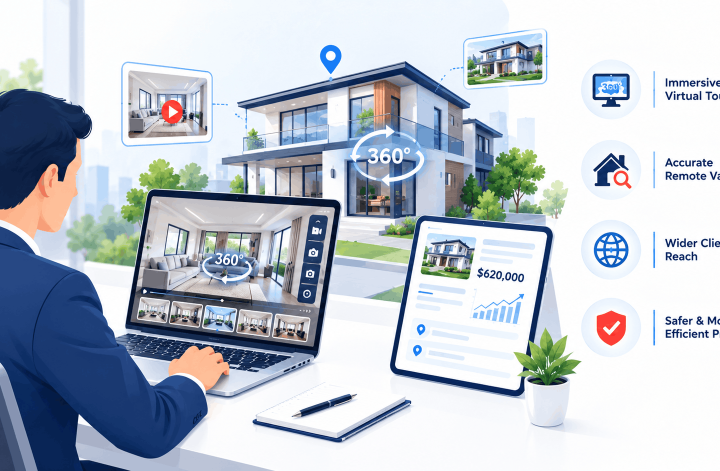
Before 2020, touring a home meant booking time off, driving across town, and walking through rooms with an agent. Valuations meant an in-person visit, a printed comparable sales sheet, and a long wait for a number. The pandemic changed that routine almost overnight. Today, many buyers begin their search online, many sellers receive a price opinion without a single stranger walking through their front door, and many transactions include a mix of digital and physical steps.
This shift is here to stay, but it has also created confusion. Some tools are excellent, others are little more than automated guesses, and it can be hard to tell which is which. This guide explains what virtual property tours and remote valuations actually do, where they work well, where they fall short, and how to use them responsibly whether you are buying, selling, or simply trying to understand what your home is worth.
What Is a Virtual Property Tour?
A virtual property tour is a digital representation of a home that lets viewers move through the space without visiting in person. The format varies widely:
- 3D walkthroughs built from a scan or series of photos, letting viewers move from room to room
- Video tours recorded by an agent or homeowner, often narrated
- Live video tours where an agent walks the property in real time while the viewer watches from a phone or laptop
- Interactive floor plans that show room dimensions, layout, and sometimes furniture placement
- 360-degree photography that lets viewers look around each room from a fixed point
Each format serves a different purpose. A 3D walkthrough helps a buyer understand flow and layout. A live video tour lets a buyer ask questions and request a closer look at a specific wall, ceiling, or window. An interactive floor plan is especially helpful when a buyer is comparing several properties and needs to judge whether a sofa, bed, or dining table will fit.
Where Virtual Tours Work Best
Virtual tours are most useful in a few situations:
- Screening properties before committing time to in-person visits
- Relocating buyers who cannot easily travel to view homes
- Investors evaluating several properties across different markets
- Busy professionals who need to narrow a list quickly
- Sellers who want to show their home to a wider audience early on
Where Virtual Tours Fall Short
Virtual tours cannot fully replace an in-person visit. They often fail to show:
- Smells, humidity, and noise levels
- The condition of the roof, foundation, plumbing, and electrical systems
- Neighborhood conditions at different times of day
- Natural light at the hours you would actually live there
- Subtle signs of water damage, pests, or poor construction
A polished tour can make a property look better than it is. Treat virtual tours as a first filter, not a final verdict.
What Is a Remote Valuation?
A remote valuation is an estimate of a property’s market value made without a full physical inspection by the person producing it. Depending on the provider and the method, a remote valuation might rely on:
- Recent comparable sales in the area
- Public records such as tax assessments and deed transfers
- Photographs or a homeowner-submitted questionnaire
- Automated valuation models (AVMs) that apply statistical formulas to property data
- A licensed professional reviewing the property’s features and local conditions
These approaches differ significantly in accuracy. An automated model that uses only public records may miss a recent renovation, a damaged roof, or a desirable corner lot. A trained agent who knows the local market, reviews current listings, and understands what buyers are willing to pay right now can often catch those details.
The Difference Between an Estimate and a Professional Opinion
It helps to understand what you are actually receiving. An automated estimate is a data-driven number. A professional price opinion, or broker price opinion (BPO), is a judgment based on comparable sales, active listings, expired listings, and local expertise. Neither is a formal appraisal, which is a licensed appraiser’s report prepared for lending or legal purposes.
Knowing the difference matters. If you are planning to list your home, an online estimate can give you a starting range, but it should not be the only input into your pricing decision. If you are a buyer, an automated figure can flag a property that seems overpriced, but it should be followed by a closer review of the comparables and the home’s actual condition.
The Post-Pandemic Hybrid Approach
The most effective approach for most people is neither fully digital nor fully in person. It is a hybrid model that uses technology to do what it does well and reserves physical visits for decisions that require them.
Here is how a typical hybrid process can work for a buyer:
- Start with virtual tours to build a shortlist of properties that match your needs and budget.
- Review remote valuations or market analysis to understand whether asking prices align with recent sales.
- Schedule in-person visits only for the homes that remain strong candidates.
- Request a second look at key areas, such as the basement, roof access, or utility room, during the in-person visit.
- Commission a licensed inspection and appraisal before making a final offer or committing to financing.
For a seller, the hybrid path often looks like this:
- Request a remote valuation to establish a preliminary price range.
- Compare the estimate against recent local sales and your agent’s market analysis.
- Prepare the home using advice from a professional walkthrough, which may be virtual or in person.
- Create a high-quality virtual tour to attract early interest from out-of-town and online buyers.
- Confirm final pricing in person before listing, so the number reflects the home’s actual condition.
The hybrid approach saves time without sacrificing the judgment that only a physical or professional review can provide.
How to Evaluate a Virtual Tour
Not all virtual tours are created equal. When you encounter one, ask yourself these questions:
- Is the entire property covered? Look for basements, garages, attics, and outdoor spaces, not just the most photogenic rooms.
- Is the image quality clear? Blurry or heavily filtered images can hide defects.
- Are the measurements accurate? Confirm dimensions against the floor plan if you plan to bring furniture.
- Is the date current? Tours of a home that has been renovated, staged differently, or sold and relisted may no longer reflect reality.
- Who created it? A tour from the listing agent is marketing. A tour from an independent professional may offer more neutral context.
If something seems missing or unclear, ask for a live video walkthrough before moving forward.
How to Evaluate a Remote Valuation
A remote valuation is only as good as the data and reasoning behind it. Before relying on one, consider the following:
- What data was used? Ask which comparable sales were considered, how recent they are, and how similar they are to your home in size, age, condition, and location.
- Was the property’s condition considered? A valuation that ignores a new roof, a kitchen renovation, or deferred maintenance is incomplete.
- How current is the market information? Prices can shift within a few months, especially in fast-moving or seasonal markets.
- Does the provider explain its reasoning? A good valuation includes adjustments and context, not just a single number.
- Is the provider qualified? Find out whether the person preparing the opinion is licensed, certified, and accountable to professional standards.
Be cautious of any valuation that promises an exact figure with no explanation, or that pushes you toward a quick decision.
Choosing the Right Professional
Whether you are working with a real estate agent, broker, or valuation specialist, credentials and conduct matter. The industry includes a wide range of practitioners, and the quality of advice varies considerably.
When evaluating a professional, consider these factors:
- Certification and training. Ask whether the person has completed specialized training and passed a certification process.
- Local market knowledge. A professional who knows your neighborhood can explain why two similar homes sold for very different prices.
- Transparency. A trustworthy professional will explain how they reached their conclusions and will tell you when data is limited.
- Professional network and standards. Membership in an organization with a code of ethics and ongoing education requirements offers an additional layer of accountability.
- Focus on accuracy over speed. Be wary of anyone who pressures you to decide quickly or who suggests a price that seems designed to win your business rather than reflect the market.
C-REPS (Certified Real Estate Pricing Specialists) is one example of a network built around these principles. Its members are active real estate agents and brokers, not appraisers, who complete training, pass certification exams, meet performance requirements, maintain membership, and follow a professional code of ethics through the National Association of BPO Professionals (NABPOP) certification program. Members combine that training with a working understanding of what buyers are willing to pay in their local markets today. Because C-REPS professionals work as part of a collaborative network, clients who work with one member can draw on the broader group’s expertise. You can learn more about the network and its standards at the official C-REPS website, and you can verify a professional’s standing directly with the organization.
Practical Examples
Example 1: The relocating buyer. A couple moving from another state uses virtual tours to narrow twelve homes down to four. They then schedule a two-day trip to visit those four in person, returning with a clear favorite. Without the virtual screening, they would have needed several extra trips.
Example 2: The cautious seller. A homeowner requests three remote valuations and receives estimates ranging from $310,000 to $365,000. Rather than picking the highest number, she asks each provider to explain their comparables. She discovers that one estimate ignored a recently finished basement, while another relied on sales from a different school district. After a professional walkthrough, she sets a list price of $342,000, supported by documented comparable sales.
Example 3: The investor. An investor evaluating rental properties uses interactive floor plans and remote valuations to screen fifty listings. He shortlists six for in-person inspection, where he discovers a foundation issue that the virtual tour did not show. He avoids a costly purchase by combining both methods.
Common Mistakes to Avoid
- Relying on a single estimate. Compare at least two or three sources before drawing conclusions.
- Skipping the inspection. No virtual tool replaces a licensed home inspection.
- Ignoring recent changes. Ask whether the home has been renovated, damaged, or re-staged since the tour was recorded.
- Confusing marketing with evidence. Listing photos are designed to sell. Look for factual details in the data.
- Overlooking local context. School boundaries, flood zones, planned developments, and neighborhood trends all affect value.
- Rushing the decision. Quick decisions are rarely the best decisions in real estate.
Frequently Asked Questions
Are virtual property tours accurate?
Virtual tours are generally accurate for layout, finishes, and room sizes when they are recent and professionally created. They are less reliable for condition issues such as moisture, structural problems, or noise. Always confirm important details in person.
How accurate is a remote valuation?
Accuracy depends on the data and method used. Automated estimates can be useful for a rough range but may miss renovations or unique features. A professional opinion that includes comparable sales and local context is usually more reliable.
Can I sell my home without any in-person visits?
Some parts of the process can be handled remotely, including initial pricing and marketing. However, most sales still require in-person steps such as inspections, appraisals, and final walkthroughs before closing.
Is a remote valuation the same as an appraisal?
No. A remote valuation is typically a professional opinion or automated estimate used for pricing decisions. A formal appraisal is prepared by a licensed appraiser and is often required by lenders.
How do I know if a virtual tour is misleading?
Look for outdated photos, missing areas, distorted measurements, or tours that avoid certain rooms. If anything seems unclear, request a live video walkthrough or an in-person visit.
What should I ask a professional before accepting a valuation?
Ask which comparable sales were used, how recent they are, how the property’s condition was considered, and what adjustments were made. Also ask about their credentials and how they stay current with local market changes.
Are remote valuations safe for privacy?
Share only the information you are comfortable providing. Reputable providers explain what data they collect and how it is used. Review privacy policies before submitting personal details.
Should I use technology or a human professional?
Use both. Technology is excellent for speed and screening, while a trained professional provides judgment, local context, and accountability. The hybrid approach combines the strengths of each.