
Becoming a C-REPS Certified Professional: A Step-by-Step Guide
Real estate professionals who want to stand out in a crowded market often look for credentials that signal genuine expertise. The C-REPS designation, short for Certified Real Estate Pricing Specialists, is one of those credentials. It is built around accurate property pricing and local market knowledge, and it asks its holders to meet a higher professional standard than many agents are held to.
This guide walks through what the designation involves, who it is designed for, and the general path toward earning it. Because certification requirements, fees, and program details can change, treat this as an orientation and confirm current specifics with the certifying organization before you commit time or money.
What Is the C-REPS Designation?
C-REPS professionals are active real estate agents and brokers who have completed specialized training in property pricing, passed certification testing, and agreed to follow a professional code of ethics. The designation is administered through the National Association of BPO Professionals (NABPOP) certification program, according to the program materials that describe it.
The core idea is straightforward. Pricing a home well requires more than comparing a few recent sales. It requires understanding what buyers are actually willing to pay in a specific neighborhood at a specific moment. C-REPS aims to formalize that skill set.
Who Is the Certification For?
The designation is intended for licensed professionals in the residential real estate field. Typical candidates include:
- Active real estate agents who want deeper pricing expertise
- Brokers who oversee teams and want a structured, credentialed standard for their agents
- Agents committed to continuing education and long-term professional development
- Professionals who prefer working within a collaborative network rather than as solo practitioners
The designation is not a substitute for an appraisal license. C-REPS professionals are agents and brokers, and the credential reflects their pricing training within that role.
Why Pursue It?
Credentials matter most when they change how clients experience your work. For agents, the C-REPS designation can serve several practical purposes:
- Credibility with sellers: Sellers evaluating listing agents often look for evidence of pricing discipline.
- Differentiation: In markets with many new agents, a specialized credential can help you explain why your approach is different.
- Structured learning: Formal training gives you a repeatable method rather than relying only on instinct.
- Network access: The collaborative model means your clients may benefit from a wider set of certified colleagues.
The designation is most valuable when you use it well. Simply displaying a credential without applying the training rarely changes outcomes for clients.
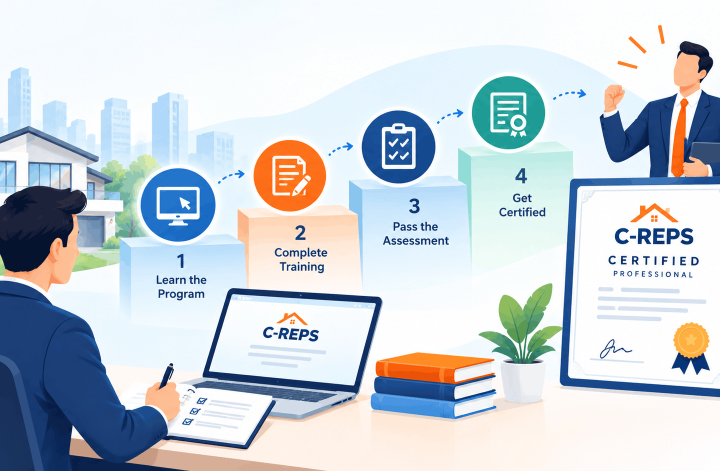
Step-by-Step: How to Become a C-REPS Certified Professional
The exact steps and requirements should be confirmed with the certifying organization, but the general pathway usually follows this sequence.
Step 1: Confirm You Meet the Baseline Eligibility
Before enrolling, verify that you hold an active real estate license in your state and are in good standing. Certification programs of this type generally assume that candidates are already practicing professionals rather than students.
Step 2: Review the Program Requirements
Request the current candidate handbook or requirements document from NABPOP or the official C-REPS program channel. Look for details on:
- Training hours and format (online, in person, or blended)
- Exam structure, passing standards, and retake policies
- Fees and renewal costs
- Membership obligations and performance expectations
- The code of ethics you will be asked to accept
Step 3: Complete the Specialized Training
The training component is designed to build your pricing methodology. Expect material covering market analysis, comparable property evaluation, adjustments for property differences, and how local conditions affect value. Schedule training in blocks you can actually finish, and take notes you can apply to your own listings and buyer consultations.
Step 4: Prepare for and Pass the Certification Exam
Treat the exam as a test of applied judgment rather than memorization. Practical preparation includes:
- Reviewing the training materials in the order they were presented
- Working through sample pricing scenarios using recent sales in your own market
- Explaining your reasoning out loud, as you would to a seller
- Scheduling the exam only after you consistently perform well on practice material
Step 5: Meet Performance and Membership Requirements
Certification is not a one-time event. The designation typically requires you to maintain membership and meet any performance standards set by the program. Keep records of your activity, client outcomes where permitted, and continuing education credits so renewal is straightforward.
Step 6: Commit to the Code of Ethics
Certified professionals agree to a code of ethics. Read it carefully before you sign. The standard usually covers honesty in pricing, disclosure of conflicts, and fair treatment of clients and colleagues.
Step 7: Maintain Your Designation
Plan for renewal from the start. Set calendar reminders for membership dates and continuing education deadlines, and budget for associated costs.
Comparison: C-REPS Versus Standard Agent Credentials
| Factor | Standard Agent Practice | C-REPS Certified Professional |
| Pricing training | Often learned on the job | Formal, structured training |
| Testing | Licensing exam only | Additional certification exam |
| Ethical commitment | State license requirements | Program code of ethics plus licensing rules |
| Network | Typically independent | Collaborative professional network |
| Ongoing obligations | License renewal | License renewal plus program membership and standards |
This comparison is general. Requirements vary by state and by program, so verify details directly.
Practical Example
Consider an agent named Maria who has been licensed for four years and frequently loses listings because sellers feel her price recommendations are guesses. She decides to pursue the designation. Over several months, she completes the training, builds a habit of documenting every comparable sale she uses, and practices explaining her adjustments to a friend who plays the role of a skeptical seller.
When Maria meets her next prospective seller, she walks through a written pricing analysis that shows each comparable, the reasoning behind each adjustment, and the range of likely outcomes. The seller is not simply impressed by a credential. The seller understands how Maria reached her number, which is the real advantage.
Frequently Asked Questions
What does C-REPS stand for?
C-REPS stands for Certified Real Estate Pricing Specialists. It is a designation for active real estate agents and brokers who complete specialized pricing training and certification.
Who can become a C-REPS professional?
The designation is generally open to licensed real estate agents and brokers. It is not intended for appraisers, who follow a separate licensing track.
Who administers the C-REPS certification?
According to the program materials provided, certification is run through the National Association of BPO Professionals (NABPOP). Confirm current administration details with the organization directly.
How long does the certification process take?
Timelines vary based on training format, study pace, and exam scheduling. Most candidates should plan for several months of preparation, but confirm the current program timeline before committing.
Does C-REPS certification replace a real estate license?
No. The designation builds on an active real estate license. You must remain licensed in your state to hold it.
Is C-REPS certification worth it for a new agent?
It depends on your goals and market. New agents may benefit from the structured training, but should first build foundational experience and confirm the cost and time investment fits their business plan.
How do I know if a C-REPS professional is legitimate?
Check the program’s official directory or ask the agent for their certification details and verification source. Legitimate professionals should be willing to share this information.
Does the designation need to be renewed?
Certification generally requires ongoing membership and standards compliance. Review the renewal requirements in the official program materials.