
Becoming a C-REPS Certified Professional: A Step-by-Step Guide
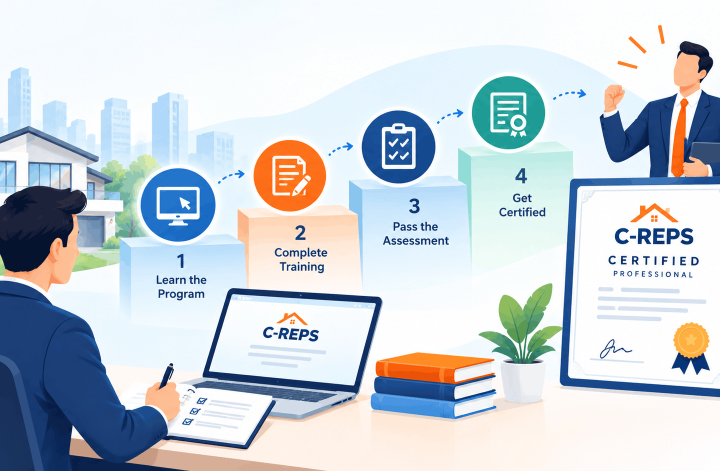
Real estate professionals who want to stand out in a crowded market often look for credentials that signal genuine expertise. The C-REPS designation, short for Certified Real Estate Pricing Specialists, is one of those credentials. It is built around accurate property pricing and local market knowledge, and it asks its holders to meet a higher professional standard than many agents are held to.
This guide walks through what the designation involves, who it is designed for, and the general path toward earning it. Because certification requirements, fees, and program details can change, treat this as an orientation and confirm current specifics with the certifying organization before you commit time or money.
What Is the C-REPS Designation?
C-REPS professionals are active real estate agents and brokers who have completed specialized training in property pricing, passed certification testing, and agreed to follow a professional code of ethics. The designation is administered through the National Association of BPO Professionals (NABPOP) certification program, according to the program materials that describe it.
The core idea is straightforward. Pricing a home well requires more than comparing a few recent sales. It requires understanding what buyers are actually willing to pay in a specific neighborhood at a specific moment. C-REPS aims to formalize that skill set.
Who Is the Certification For?
The designation is intended for licensed professionals in the residential real estate field. Typical candidates include:
- Active real estate agents who want deeper pricing expertise
- Brokers who oversee teams and want a structured, credentialed standard for their agents
- Agents committed to continuing education and long-term professional development
- Professionals who prefer working within a collaborative network rather than as solo practitioners
The designation is not a substitute for an appraisal license. C-REPS professionals are agents and brokers, and the credential reflects their pricing training within that role.
Why Pursue It?
Credentials matter most when they change how clients experience your work. For agents, the C-REPS designation can serve several practical purposes:
- Credibility with sellers: Sellers evaluating listing agents often look for evidence of pricing discipline.
- Differentiation: In markets with many new agents, a specialized credential can help you explain why your approach is different.
- Structured learning: Formal training gives you a repeatable method rather than relying only on instinct.
- Network access: The collaborative model means your clients may benefit from a wider set of certified colleagues.
The designation is most valuable when you use it well. Simply displaying a credential without applying the training rarely changes outcomes for clients.
Step-by-Step: How to Become a C-REPS Certified Professional
The exact steps and requirements should be confirmed with the certifying organization, but the general pathway usually follows this sequence.
Step 1: Confirm You Meet the Baseline Eligibility
Before enrolling, verify that you hold an active real estate license in your state and are in good standing. Certification programs of this type generally assume that candidates are already practicing professionals rather than students.
Step 2: Review the Program Requirements
Request the current candidate handbook or requirements document from NABPOP or the official C-REPS program channel. Look for details on:
- Training hours and format (online, in person, or blended)
- Exam structure, passing standards, and retake policies
- Fees and renewal costs
- Membership obligations and performance expectations
- The code of ethics you will be asked to accept
Step 3: Complete the Specialized Training
The training component is designed to build your pricing methodology. Expect material covering market analysis, comparable property evaluation, adjustments for property differences, and how local conditions affect value. Schedule training in blocks you can actually finish, and take notes you can apply to your own listings and buyer consultations.
Step 4: Prepare for and Pass the Certification Exam
Treat the exam as a test of applied judgment rather than memorization. Practical preparation includes:
- Reviewing the training materials in the order they were presented
- Working through sample pricing scenarios using recent sales in your own market
- Explaining your reasoning out loud, as you would to a seller
- Scheduling the exam only after you consistently perform well on practice material
Step 5: Meet Performance and Membership Requirements
Certification is not a one-time event. The designation typically requires you to maintain membership and meet any performance standards set by the program. Keep records of your activity, client outcomes where permitted, and continuing education credits so renewal is straightforward.
Step 6: Commit to the Code of Ethics
Certified professionals agree to a code of ethics. Read it carefully before you sign. The standard usually covers honesty in pricing, disclosure of conflicts, and fair treatment of clients and colleagues.
Step 7: Maintain Your Designation
Plan for renewal from the start. Set calendar reminders for membership dates and continuing education deadlines, and budget for associated costs.
Comparison: C-REPS Versus Standard Agent Credentials
| Factor | Standard Agent Practice | C-REPS Certified Professional |
| Pricing training | Often learned on the job | Formal, structured training |
| Testing | Licensing exam only | Additional certification exam |
| Ethical commitment | State license requirements | Program code of ethics plus licensing rules |
| Network | Typically independent | Collaborative professional network |
| Ongoing obligations | License renewal | License renewal plus program membership and standards |
This comparison is general. Requirements vary by state and by program, so verify details directly.
Practical Example
Consider an agent named Maria who has been licensed for four years and frequently loses listings because sellers feel her price recommendations are guesses. She decides to pursue the designation. Over several months, she completes the training, builds a habit of documenting every comparable sale she uses, and practices explaining her adjustments to a friend who plays the role of a skeptical seller.
When Maria meets her next prospective seller, she walks through a written pricing analysis that shows each comparable, the reasoning behind each adjustment, and the range of likely outcomes. The seller is not simply impressed by a credential. The seller understands how Maria reached her number, which is the real advantage.
Frequently Asked Questions
What does C-REPS stand for?
C-REPS stands for Certified Real Estate Pricing Specialists. It is a designation for active real estate agents and brokers who complete specialized pricing training and certification.
Who can become a C-REPS professional?
The designation is generally open to licensed real estate agents and brokers. It is not intended for appraisers, who follow a separate licensing track.
Who administers the C-REPS certification?
According to the program materials provided, certification is run through the National Association of BPO Professionals (NABPOP). Confirm current administration details with the organization directly.
How long does the certification process take?
Timelines vary based on training format, study pace, and exam scheduling. Most candidates should plan for several months of preparation, but confirm the current program timeline before committing.
Does C-REPS certification replace a real estate license?
No. The designation builds on an active real estate license. You must remain licensed in your state to hold it.
Is C-REPS certification worth it for a new agent?
It depends on your goals and market. New agents may benefit from the structured training, but should first build foundational experience and confirm the cost and time investment fits their business plan.
How do I know if a C-REPS professional is legitimate?
Check the program’s official directory or ask the agent for their certification details and verification source. Legitimate professionals should be willing to share this information.
Does the designation need to be renewed?
Certification generally requires ongoing membership and standards compliance. Review the renewal requirements in the official program materials.
How to Choose a Real Estate Agent: Why C-REPS Certification Matters

Choosing a real estate agent is one of the most important decisions a homeowner can make, yet most people approach it with remarkably little diligence. They might ask a friend for a recommendation, search for an agent online, or meet with whoever answers the phone first. This casual approach frequently results in working with someone who is primarily focused on closing a deal quickly rather than serving the client’s genuine interests.
The reality is that real estate agents operate with varying levels of expertise, professionalism, and commitment to accuracy. A real estate license ensures someone has passed a basic exam and met minimum requirements. But the license says nothing about an agent’s skill at pricing a home, understanding market conditions, or prioritizing client welfare over commission speed.
This is where professional certification becomes essential. When you choose a real estate agent, you should be looking for someone who has gone beyond basic licensing to demonstrate specialized expertise and commitment to professional excellence. C-REPS certification is one meaningful way to identify that level of professional commitment.
This guide walks you through what to look for when selecting an agent, how to evaluate credentials, why C-REPS certification matters, and what questions to ask before making your decision.h
Why Agent Selection Matters So Much
The agent you select influences nearly every aspect of your real estate transaction. They recommend a price for your home (which affects your final proceeds), they market your property to potential buyers, they negotiate on your behalf, and they shepherd the transaction through closing. An excellent agent can add significant value. A mediocre agent can cost you money and time.
Consider pricing alone. If an agent overprices your home by 5 percent to 10 percent to win your listing, that overpricing frequently results in the home sitting unsold, requiring price reductions, and ultimately selling for less than it would have sold for at the correct price from day one. The financial damage easily exceeds any commission difference between agents. Similarly, if an agent underprices your home out of excessive caution or incomplete market analysis, you lose money on the sale.
Beyond pricing, your agent’s negotiating skill, communication style, and follow-through on details affect the outcome. A professional agent catches issues during inspections that others miss, including paint considerations that may affect a property’s condition and perceived value. They identify contingencies that matter for your situation.
They communicate clearly with buyers and handle conflicts professionally.
Choosing well matters. Choosing poorly is expensive.
Understanding Agent Credentials: More Than Just a License
A real estate license is a minimum credential, not a professional achievement. Think of it like a driver’s license. Having one proves you passed a test and understand basic rules. It does not make someone a professional driver, a skilled negotiator, or an expert in any specific area of real estate.
Professional certifications go further. They indicate that someone has completed specialized training, passed more rigorous exams, committed to continuing education, and agreed to professional standards beyond basic licensing requirements.
Real Estate License: The Baseline
A real estate license is necessary but not sufficient. All agents must hold one to practice. Requirements vary slightly by state, but typically include coursework covering property law, contracts, ethics, and local regulations, plus passing a state exam.
What a license does not require:
- Specialized knowledge in any area of real estate
- Continuing education after initial licensing (in some states)
- Demonstrated competence in pricing, negotiation, or client service
- Professional accountability beyond basic legal requirements
- Membership in any professional organization
Professional Designations: The Differentiation
Professional designations, by contrast, require ongoing commitment. C-REPS certification through NABPOP is one example. Other examples include Accredited Buyer’s Representative (ABR), Certified International Property Specialist (CIPS), or Seniors Real Estate Specialist (SRES).
These designations all share common characteristics:
- Specialized training beyond basic licensing
- Rigorous examination to verify competency
- Continuing education requirements
- Professional code of ethics
- Accountability and disciplinary procedures
- Membership in a professional organization
When an agent holds one of these designations, they have demonstrated commitment to specialized expertise and agreed to ongoing professional development.
What C-REPS Certification Actually Means
C-REPS certification is specifically focused on one critical competency: accurate property pricing. In an industry where pricing mistakes can cost tens of thousands of dollars, having an agent certified in pricing methodology and market analysis is a significant advantage.
To earn and maintain C-REPS certification, professionals must:
Complete Specialized Training
Coursework goes deep into valuation methodology, comparative market analysis, market trend analysis, and the psychological and ethical dimensions of pricing recommendations. This is not generic real estate education. It is focused specifically on the skills and knowledge required to price properties accurately.
Pass Rigorous Examinations
After training, candidates face comprehensive written exams testing their understanding of pricing principles, methodology, and professional standards. These exams are designed to be challenging, not to be easily passed.
Meet Performance Standards
To maintain certification, agents must complete a minimum number of valuations annually and demonstrate accuracy in their pricing. This creates ongoing accountability. An agent cannot simply earn the credential once and coast.
Pursue Continuing Education
Markets change, technology evolves, and professional standards shift. Certified agents are required to complete ongoing professional development to keep their credentials current.
Adhere to Professional Ethics
Members agree to a detailed code of conduct covering honesty in pricing, conflict of interest disclosure, client confidentiality, and fair dealing. Violations can result in removal from the certification program.
What this means in practice: A C-REPS certified agent has invested significantly in developing expertise in accurate pricing. They have demonstrated that expertise through examination. They have agreed to maintain that expertise through ongoing education. And they have accepted accountability to professional standards.
Red Flags: What to Avoid When Choosing an Agent
Before discussing what to look for, understand what warns you away from an agent. These red flags suggest an agent prioritizes speed and commission over client service and accuracy.
“I’ll list it at whatever price you want”
This is perhaps the most dangerous statement an agent can make. Professional agents provide pricing recommendations based on market analysis, not client wishes. If an agent simply agrees with any price you propose, they are not providing professional expertise. They are enabling a potentially costly mistake.
Vague Pricing Methodology
If an agent cannot clearly explain how they arrived at their price recommendation, be concerned. Professional agents can walk you through the comparable properties they selected, the adjustments they applied, and the market conditions they considered. If the explanation is vague or hand-wavy, the analysis probably is too.
No Written Analysis
Any reputable agent should provide a written Comparative Market Analysis (CMA) you can review. If they give you a verbal estimate without documentation, they are not following professional standards.
Reluctance to Share References
Most professionals will provide references from recent clients. If an agent is unwilling or defensive about sharing references, that is a warning sign.
Emphasis on Quick Deals
Language that emphasizes speed (“We’ll get this sold fast”) rather than accuracy (“We’ll price it correctly and find the right buyer”) suggests misaligned priorities. Real estate is not a race. Accuracy and good outcomes matter more than speed.
High Agent Turnover
If you research an agent and find they have been with multiple brokerages in a short time or consistently change teams, this suggests instability or issues with their work.
Lack of Local Market Knowledge
An agent should be able to speak knowledgeably about your specific neighborhood, recent sales, buyer demand, and local conditions. If they seem unfamiliar with your area or default to vague generalizations, they lack the local expertise that matters.
No Professional Affiliations
While not every good agent holds a certification, most professionals belong to industry organizations or hold meaningful credentials. Complete absence of professional involvement suggests a casual approach to the business.
What to Look For: Characteristics of Professional Agents
Now shift to what you should actively seek when evaluating agents.
Professional Credentials Beyond Basic License
Look for designations that demonstrate specialized training and ongoing commitment. C-REPS certification is one example. So are ABR, CRS (Certified Residential Specialist), or other recognized designations. These are not absolute requirements, but they are positive indicators of professional commitment.
Detailed Pricing Analysis
The agent should provide a thorough written Comparative Market Analysis. This document should explain the methodology, list comparable properties with sale prices and adjustment justifications, discuss market conditions, and present a clear price recommendation. You should be able to understand and question every aspect of it.
Local Market Knowledge
A professional agent should be able to discuss your neighborhood with specificity. They should know recent sales, understand buyer demand patterns, and be familiar with the local factors that affect pricing (school boundaries, proximity to amenities, neighborhood trajectory).
Clear Communication
Professional agents explain their reasoning clearly, without jargon, and are willing to answer questions. They do not get defensive about pricing recommendations. They explain both opportunities and risks in your market.
Transparency About Process
They should clearly outline the listing process, explain timelines, discuss marketing plans, and be explicit about what they will and will not do. No surprises or hidden assumptions.
Multiple Sales or Valuations
An agent should have an active portfolio of current clients and recent transactions. This gives them current market knowledge and demonstrates they are actually doing business, not just licensed but inactive.
Professional Affiliations
Membership in the National Association of Realtors (NAR), state real estate associations, and local boards is standard. Additional affiliations with organizations focused on specific competencies suggest deeper professional commitment.
Willingness to Adapt to Your Needs
Different clients have different priorities. A professional agent listens to what matters to you and tailors their approach accordingly, rather than applying a one-size-fits-all process.
Questions to Ask Before Hiring an Agent
Use these questions to evaluate an agent’s professionalism and expertise before you commit to working together.
“Walk me through your pricing methodology. What comparables did you select and why?”
Listen for specificity. Do they explain their comparable selection process clearly? Can they justify why certain properties were chosen? Vague answers suggest vague methodology.
“How do you adjust for differences between comparable properties and mine?”
This tests whether they understand the principle of adjustment and can articulate it clearly. A professional can explain how they value specific features based on actual market data.
“What is your track record on pricing accuracy?”
Ask directly: What percentage of homes you list sell at or very close to the listing price? How often do listings need price reductions? Professional agents track this and can demonstrate a strong accuracy record.
“Are you C-REPS certified, and if not, what specialized training or credentials do you hold in pricing and market analysis?”
This establishes whether they have professional certification and what their qualifications are. C-REPS is one meaningful credential, but other designations are also valuable.
“Can I review a sample CMA you have prepared?”
Ask to see an actual Comparative Market Analysis (with client information removed). This shows you how they work and allows you to evaluate the quality and thoroughness of their analysis.
“What is your marketing plan for my property?”
Professional marketing goes beyond just posting to the MLS. It should include professional photos, virtual tours if appropriate, targeted advertising, and open house strategy. Listen for how they plan to reach potential buyers.
“How often will we communicate, and how will you keep me informed about buyer interest and market conditions?”
A professional agent maintains regular communication. They do not leave clients wondering how their home is performing.
“How long have you been actively practicing real estate, and what has your experience been in my specific market?”
Experience matters, but local market experience matters more. Someone active for five years in your neighborhood is more valuable than someone with twenty years in a different market.
“If I disagree with your pricing recommendation, how would you handle that?”
Listen for whether they stand firm on professional recommendations or simply cave to client pressure. A professional explains their reasoning clearly but ultimately honors your decision, even if they believe it is a mistake.
“What happens if my home does not sell as quickly as expected?”
This reveals their process for monitoring market conditions and adjusting strategy. Do they have a systematic approach, or do they just wait and hope?
“Can you provide references from clients you have worked with in the past year?”
Any professional should be happy to provide references. If they are reluctant or defensive, that is a warning sign.
The C-REPS Advantage: What Certification Delivers
When you work with a C-REPS certified agent, you gain several specific advantages beyond what a typical agent provides.
Systematic Pricing Methodology
Every C-REPS professional follows a trained, tested approach to pricing. This consistency means you receive analysis that follows professional standards, not individual whim or guesswork.
Access to Network Knowledge
C-REPS is a collaborative network. When you hire one certified agent, you gain access to the collective expertise of the entire network. Complex pricing questions benefit from shared knowledge and experience.
Ongoing Professional Development
Certification requires continuing education. This means your agent stays current with market trends, new valuation technology, and evolving best practices. They do not coast on knowledge from five years ago.
Accountability to Professional Standards
Members are accountable to NABPOP and the professional community, not just to individual clients. Professional standards create incentive to do quality work and consequences for cutting corners.
Demonstrated Expertise in Pricing
The certification specifically validates expertise in the area that matters most for sellers and buyers. It is not a general real estate credential. It is focused on the one thing that affects financial outcomes most directly: accurate pricing.
Ethical Commitment
C-REPS members agree to a detailed code of ethics that prioritizes accuracy and client welfare. This creates alignment between their incentives and your interests.
Comparing Agents: A Quick Evaluation Framework
When you are down to interviewing multiple agents, use this simple framework to compare them side by side.
| Factor | Agent A | Agent B | Agent C |
| Years active in local market | |||
| C-REPS certified or other designation | |||
| Percentage homes sold at or near list price | |||
| Can explain pricing methodology clearly | |||
| Provides written CMA | |||
| References available | |||
| Active number of current listings | |||
| Marketing plan detail and sophistication | |||
| Communication frequency and style | |||
| Local market knowledge demonstrated |
This framework helps you evaluate comparable professionals on consistent criteria rather than being swayed by personality or sales pitch.
Making Your Final Decision
After you have evaluated multiple agents, step back and consider the complete picture. The least expensive agent is not necessarily the best value. The most personable agent is not necessarily the most professional. The agent with the most listings is not necessarily the one who will serve you best.
Look for someone who combines:
- Professional credentials and demonstrated expertise
- Clear, systematic methodology you can understand and evaluate
- Local market knowledge specific to your area
- Transparent communication
- Professional accountability
- Alignment between their incentives and your interests
The agent you choose will influence your financial outcome significantly. Invest time in the selection process. Ask tough questions. Verify credentials. Check references. The small investment of diligence in choosing well pays dividends in the execution.
Frequently Asked Questions
What is the most important credential for a real estate agent to have?
While real estate licensing is required, looking for additional professional credentials like C-REPS certification demonstrates specialized expertise and commitment to continuing education. These designations indicate an agent has gone beyond minimum requirements and maintains professional standards.
How do I verify that an agent’s C-REPS certification is legitimate?
You can verify C-REPS certification through NABPOP’s directory or by asking the agent for their certification documentation. Legitimate certifications are publicly verifiable and can be confirmed through the issuing organization.
Is a C-REPS certified agent required, or are there other qualified options?
C-REPS certification is one way to identify expertise in pricing and market analysis, but other professional designations also indicate commitment to professional development. The key is looking for agents who have pursued additional training and maintain professional standards beyond basic licensing.
What should I do if the agent I want to hire does not have professional certification?
If an agent does not have certification, ask them directly about their specialized training, their track record on pricing accuracy, and their methodology. An uncertified agent can still be professional and competent, but you should verify their qualifications carefully.
How much difference does agent selection really make on my real estate outcome?
Agent selection influences pricing accuracy, marketing effectiveness, negotiation skill, and overall transaction management. These factors collectively can easily result in a tens-of-thousands-of-dollars difference in your outcome. Selection matters significantly.
What if my agent’s price recommendation is much higher or lower than I expected?
Ask them to walk through their analysis in detail. Review the comparables they selected and the adjustments they applied. A professional agent can explain and defend their recommendation. However, their market-based analysis should be weighted heavily in your decision.
Should I use an agent who specializes in my neighborhood versus someone with broader market experience?
Hyperlocal specialization is valuable because agents develop deep knowledge of specific neighborhoods. However, broader market experience can also be valuable for perspective. Look for someone with strong knowledge of your specific area specifically, whether that comes from deep specialization or strong general experience in the market.
What red flags should make me immediately stop considering an agent?
Be cautious about agents who agree with any price you propose, cannot explain their methodology clearly, do not provide written analysis, are vague about the process, or seem focused on speed over accuracy. These suggest misaligned priorities.
How long should I commit to working with an agent if the listing is not selling?
Most listing agreements run for 90 days. If your home is not selling as expected, you should have a clear discussion with your agent about why, what market conditions suggest, and whether pricing adjustment makes sense. Evaluate the situation professionally, not emotionally.
Can I change agents mid-process if I am unhappy with performance?
Listing agreements typically allow you to terminate, though you may be bound through a certain date. Review your agreement and discuss with your agent if you have concerns. However, changing agents disrupts the process, so resolve concerns directly with your current agent if possible.
Choosing Your Real Estate Partner
Selecting a real estate agent is not a casual decision. This person will represent you in one of the largest financial transactions of your life. They will provide advice that affects your outcome significantly. They will negotiate on your behalf.
Choose someone who brings professional expertise, systematic methodology, local knowledge, and genuine commitment to your interests. Look for professional credentials like C-REPS certification. Ask tough questions. Verify qualifications. Check references.
The small investment of diligence in agent selection pays substantial dividends in outcome. A professional agent who prioritizes accuracy and client welfare will serve you far better than a well-liked but unaccountable agent who prioritizes quick commission.
Ready to select a real estate partner you can trust? Connect with a C-REPS certified agent who combines professional expertise with commitment to accurate pricing and client partnership.
What C-REPS Certification Means for Real Estate Professionals

When you’re buying or selling a home, few decisions matter more than choosing the right agent. But how do you know which professionals truly have the expertise to guide your most important financial transaction? That’s where professional credentials like C-REPS come in.
The real estate industry attracts professionals across a wide spectrum of experience and commitment. While anyone with a license can call themselves a real estate agent, certified professionals who hold specialized credentials demonstrate a measurable commitment to expertise, market knowledge, and ethical practice. Understanding what these credentials represent helps you make more informed decisions about who to trust with your property.
C-REPS (Certified Real Estate Pricing Specialists) represents one of the most significant professional certifications in the industry, particularly for sellers and buyers who need accurate, data-driven pricing strategies. But what exactly does this certification mean, and why should it matter to you?
What is C-REPS Certification?
C-REPS stands for Certified Real Estate Pricing Specialists. It’s a professional designation earned by real estate agents and brokers who have completed specialized training, passed rigorous certification exams, and committed to ongoing professional development and ethical standards.
The certification is administered through the National Association of BPO Professionals (NABPOP), a recognized credentialing body that sets standards for real estate professionals focused on pricing accuracy and market expertise. Unlike a simple real estate license, which is a legal requirement to practice, C-REPS certification is a voluntary professional achievement that signals additional expertise and dedication.
Professionals who earn C-REPS credentials are not appraisers. Instead, they’re active real estate agents and brokers who combine systematic professional training with practical, on-the-ground market knowledge. They understand what buyers are actually willing to pay today in their specific local markets, not just historical data or theoretical values.
The Certification Process
Earning C-REPS designation involves several significant steps:
- Specialized Training: Candidates complete comprehensive coursework focused on property pricing methodologies, market analysis, and valuation principles specific to real estate transactions.
- Certification Exams: Professionals must pass rigorous tests demonstrating mastery of pricing concepts and market analysis techniques.
- Performance Requirements: Ongoing performance standards ensure certified agents maintain the highest levels of service and accuracy.
- Membership Maintenance: C-REPS professionals must maintain active membership and participate in continuing education to keep their credentials current.
- Professional Code of Ethics: All C-REPS professionals commit to a strict code of ethics that goes beyond standard licensing requirements.
This multi-layered process means that agents holding C-REPS credentials have invested significant time, effort, and resources into their professional development. It’s not an easy designation to earn or maintain, which is precisely why it carries meaningful weight.
Why Real Estate Agent Credentials Matter
The real estate industry faces a unique credibility challenge. While licensing requirements exist to protect the public, they establish only a minimum baseline. A licensed agent might have been practicing for one month or twenty years. They might specialize in luxury residential properties, commercial real estate, or both. They might work in a highly competitive urban market or a quieter rural area.
Professional credentials like C-REPS bridge this gap by providing a standardized measure of expertise and commitment. When you work with a credentialed professional, you know several things beyond the legal minimum:
- They’ve proven their knowledge: Certification exams aren’t formalities. They’re rigorous assessments that measure actual competency in specialized areas.
- They’ve committed to continuing education: Markets change, technologies evolve, and best practices improve. Certified professionals stay current with ongoing training.
- They’ve accepted accountability: Professional codes of ethics create accountability structures that go beyond what licensing alone provides.
- They’ve invested in their reputation: Professionals who pursue advanced credentials are signaling that their reputation matters to them, which means they have real skin in the game.
For home sellers especially, credentials matter enormously. An inaccurate price listing costs money. Price too high, and your property sits on the market while comparable homes sell. Price too low, and you leave significant equity on the table. Professional pricing expertise can mean tens of thousands of dollars in transaction outcomes.
What Makes C-REPS Different From Average Agents
The real estate market includes professionals across a spectrum of commitment and expertise. C-REPS professionals distinguish themselves in several critical ways:
Professional Certification vs. Licensing Alone
Any agent can be licensed. C-REPS professionals have voluntarily pursued advanced certification, which means they’ve invested additional time, money, and effort beyond minimum legal requirements. This signals genuine professional commitment.
Deep Local Market Knowledge With Systematic Training
Some agents develop strong market knowledge through years of experience. Others rely on technology and data without deep community understanding. C-REPS professionals combine both: systematic, professional training plus practical knowledge of what actually sells in their specific markets today.
Many agents look backward at historical data. C-REPS specialists focus on current market conditions and what contemporary buyers are actually willing to pay in real-world transactions, not theoretical models.
Network and Collaboration
When you hire a single C-REPS professional, you don’t get just one agent. You gain access to an entire network of certified professionals who collaborate and share market intelligence. This network effect amplifies the value you receive.
Accuracy and Rigor
C-REPS professionals apply a rigorous, systematic approach to pricing that combines professional training principles with real-market expertise. This methodology reduces the guesswork and emotion that sometimes cloud pricing decisions.
Professional Commitment
In an industry sometimes characterized by quick-commission seeking and “fly-by-night” operators who disappear after closing, C-REPS professionals signal genuine, long-term commitment to the profession and their clients’ outcomes.
Who Benefits Most From Working With C-REPS Professionals?
Home Sellers
If you’re selling a property, pricing accuracy directly impacts your financial outcome. C-REPS professionals excel at competitive market analysis, helping you understand the exact price point that attracts serious buyers while maximizing your net proceeds. For many sellers, the difference between a C-REPS professional and an average agent translates to thousands of dollars.
Home Buyers
Buyers benefit from C-REPS professionals’ deep understanding of fair market value. They can help you recognize when a property is priced reasonably and when a seller is asking too much. This expertise helps you avoid overpaying and make confident offers that reflect true market conditions.
Homeowners and Investors
Property owners considering refinancing, investment decisions, or estate planning often need professional valuations for their property holdings. C-REPS professionals provide the credentialed expertise needed to support important financial decisions.
Anyone Seeking Professional Guidance
If you’re navigating any significant real estate transaction and want to work with truly credentialed, professional experts rather than average agents, C-REPS professionals represent genuine professional excellence.
How C-REPS Professionals Approach Pricing
The methodology C-REPS professionals use differs fundamentally from simplistic approaches some agents use. Here’s what sets their process apart:
Comparative Market Analysis
C-REPS professionals conduct thorough comparative market analyses (CMAs) that examine recent sales of truly comparable properties, not just any homes in the area. They understand which property characteristics drive value and can adjust for legitimate differences.
Current Market Conditions
Rather than averaging sales over a long historical period, C-REPS professionals focus on current market conditions. In a market shifting from seller’s to buyer’s market, this distinction matters significantly.
Buyer Psychology and Real-World Pricing
C-REPS professionals understand how property characteristics can influence market value, including condition, improvements, location, and house safety considerations. They don’t rely solely on formulas or algorithms; they combine data analysis with practical knowledge of genuine buyer preferences in their market.
Regular Updates and Adjustments
Markets move quickly. C-REPS professionals continuously monitor market conditions and adjust their analyses as new data emerges. A price recommendation from three months ago might not reflect current conditions.
Professional Documentation
Every C-REPS pricing analysis includes detailed documentation of the methodology, comparable properties used, adjustments made, and reasoning. This transparency helps clients understand the basis for recommendations.
The Ethical Standards C-REPS Professionals Maintain
Professional credentials carry responsibilities. C-REPS professionals must adhere to a comprehensive code of ethics that typically includes:
- Honest and Accurate Representations: Providing truthful information about properties and markets, never misleading clients for commission benefit.
- Conflict of Interest Disclosure: Clearly disclosing any situations where interests might conflict.
- Client Confidentiality: Protecting confidential client information and transaction details.
- Fair Dealing: Treating all parties to a transaction fairly and honestly.
- Professional Competence: Only taking on work within their area of expertise and maintaining necessary skills.
- Continuing Education: Staying current with market changes, legal developments, and professional best practices.
These standards create accountability mechanisms beyond what basic licensing provides. Violations can result in losing the credential, which creates meaningful incentive to maintain the highest professional standards.
How to Find and Work With C-REPS Professionals
If you’re ready to work with a C-REPS professional, here’s how to find one:
Search Directories
Start with NABPOP’s official directory of certified C-REPS professionals. This ensures you’re working with someone who has actually earned and maintained the credential.
Verify Credentials
When an agent claims C-REPS certification, verify it directly through NABPOP rather than simply accepting their word. Legitimate professionals expect credential verification.
Ask About Experience
C-REPS certification is relatively specialized. Ask how long the agent has held the credential and how many transactions they’ve completed using C-REPS methodologies.
Review Market Knowledge
During initial consultations, assess their depth of local market knowledge. Do they understand the specific neighborhoods you’re interested in? Can they speak knowledgeably about recent market trends?
Evaluate Communication
Work with professionals who explain their methodology and reasoning clearly. You should understand why they’re recommending specific strategies and pricing points.
Check References
Ask for references from recent clients, particularly those in situations similar to yours. What did previous clients appreciate about working with this professional?
C-REPS Certification in Your Real Estate Transaction
When it’s time to buy or sell a property, you’re making a decision that affects your financial future. Choosing to work with a C-REPS professional is choosing expertise, accountability, and professional excellence.
For sellers, this choice often means the difference between maximizing your proceeds and leaving money on the table. For buyers, it means working with someone who truly understands fair market value and can guide you to wise decisions.
The real estate professionals who pursue C-REPS certification are signaling something important: they take their profession seriously, they’ve invested in expertise beyond minimum requirements, and they’re committed to professional excellence and ethical practice.
In an industry sometimes characterized by varying levels of professionalism, that commitment makes a measurable difference.
Frequently Asked Questions
What is the difference between C-REPS certification and a real estate license?
A real estate license is a legal requirement to practice as an agent or broker. It establishes minimum competency for basic real estate transactions. C-REPS certification is a voluntary professional credential that demonstrates specialized expertise in property pricing and market analysis. Think of licensing as the baseline requirement and C-REPS as evidence of advanced professional development and commitment to excellence.
How long does it take to earn C-REPS certification?
The timeline varies based on individual circumstances, but most professionals can complete the training and certification process within several months. This includes completing specialized coursework, studying for exams, and passing all required tests. The exact timeframe depends on your existing experience and how intensively you pursue the credential.
Is C-REPS certification required to practice real estate?
No. C-REPS certification is completely voluntary. Any licensed real estate agent can practice without it. However, professionals who pursue the certification signal additional expertise and commitment to professional excellence. It’s a differentiator that helps them attract clients seeking specialized knowledge.
How much does C-REPS certification cost?
Costs vary but typically include training course fees, exam fees, and ongoing membership dues. These costs are modest compared to the potential value professionals gain from the credential. If you’re considering working with a C-REPS professional, you can ask them directly about any additional costs their clients might incur for their specialized services.
How often do C-REPS professionals need to renew their certification?
C-REPS professionals must maintain their certification through ongoing membership and continuing education requirements. Most programs require annual renewal along with documented completion of continuing education hours. This ensures certified professionals stay current with market changes and best practices.
Will hiring a C-REPS professional cost me more?
Many C-REPS professionals charge the same commission rates as other agents. The value they provide isn’t in higher costs but in better outcomes. For sellers especially, improved pricing accuracy often means significantly better net proceeds. For buyers, it means better decision-making that prevents overpaying. The investment in professional expertise typically pays for itself many times over.
Can I trust that a C-REPS professional will charge fair prices?
C-REPS professionals commit to ethical standards that specifically address fair dealing and honest representations. Additionally, their credential creates accountability; violations of professional standards can result in losing the certification. This accountability structure creates powerful incentive to maintain highest ethical standards. That said, any professional relationship works best when based on clear communication and mutual understanding of expectations.
Are C-REPS professionals appraisers?
No. C-REPS professionals are real estate agents and brokers, not appraisers. While appraisers provide formal valuations for lending purposes, C-REPS professionals provide expert pricing guidance for actual market transactions. Their focus is understanding what real buyers will actually pay today in your specific market.
How do I verify someone actually has C-REPS certification?
Check directly with NABPOP (National Association of BPO Professionals), the organization that administers the credential. Their website typically includes a directory of certified professionals. Never simply trust an agent’s claim without independent verification.
Should I only work with C-REPS professionals?
C-REPS certification signals professional expertise, but other excellent agents may have different certifications or simply strong experience and reputations. The credential is one valuable indicator of competence. When evaluating any professional, consider their credentials, experience, local market knowledge, references, and communication style as a complete package.